
At Home in the Apiary
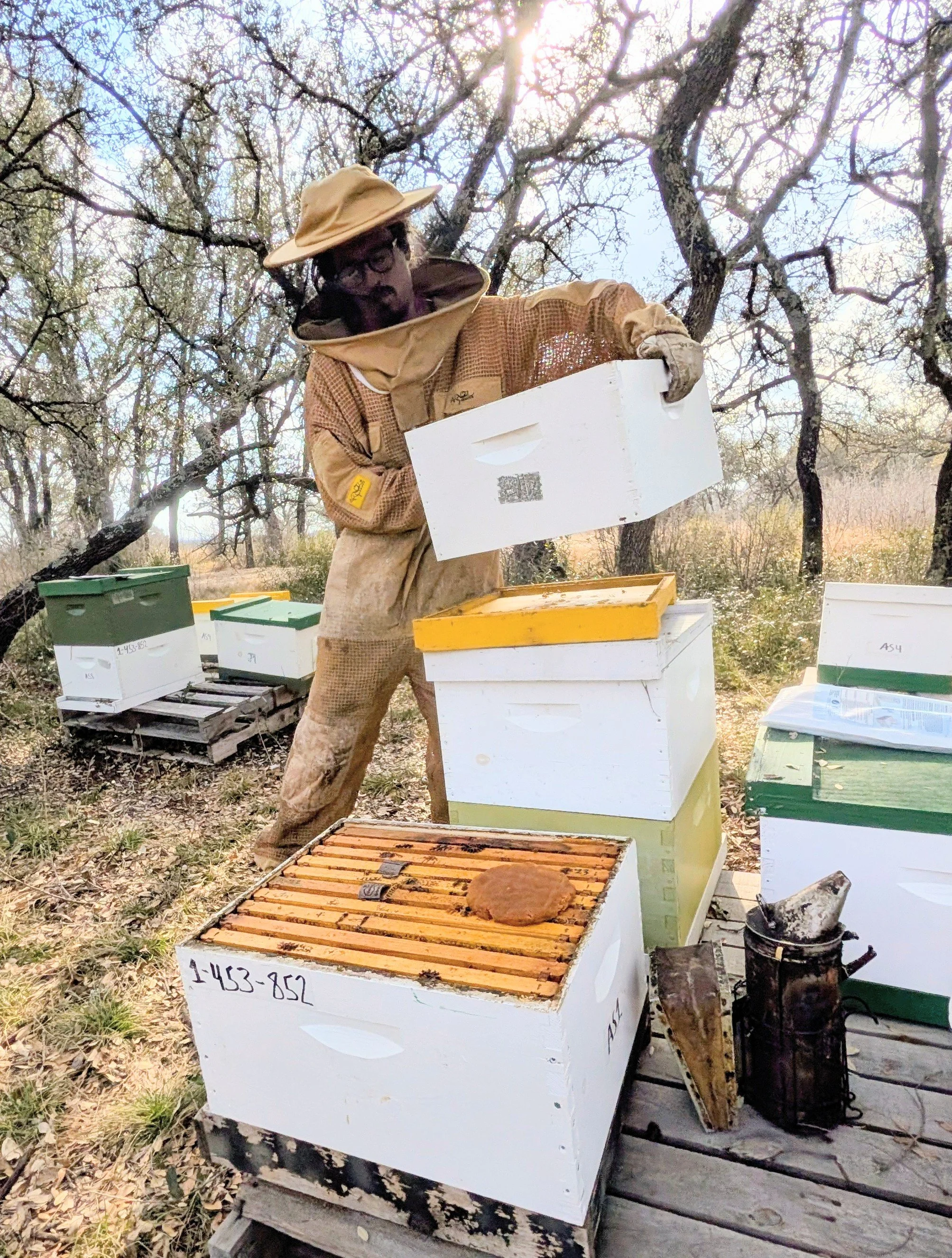
By Cody Read for PachaMama Bees
In 2020, when the world seemingly stood still, many of us were forced out of our positions—or given the rare opportunity to reflect on how we truly wanted to spend our lives moving forward. With the future uncertain, I knew my own life was overdue for a much‑needed career change.
I have always held a deep appreciation for the underrepresented biological niches that play vital roles in the larger picture of our ecosystem. I cheer for the underdogs: roots wrapped in myceliated sheaths, the voracious appetites of composting organisms thriving in the darkness of the soil, and the tireless efforts of pollinators sustaining the life‑bearing flora that blankets our planet and allows for our every breath. It was during this period of reflection that I became truly fascinated with one of Earth’s most selfless underdogs—the bee.
My research initially focused on native bee species here in Texas, but I soon became increasingly intrigued by honey bees and the practice of beekeeping as a potential hobby. I traveled down countless internet rabbit holes, learning everything from bee removal and hobbyist beekeeping to full‑scale honey production apiaries. The more I learned about honey bees, the more I understood why these humble insects have earned such a prominent reputation among environmentalists and nature lovers alike. They work harder than nearly any other living creature I know, and their selfless, community‑oriented approach to life within the colony is remarkably distinct from that of almost any other species. It’s as if the honey bee evolved to be the perfect teammate—the “employee of the month” every month, and an adventurous explorer both on land and in the air.
I knew I wanted to try my hand at beekeeping, but the ongoing pandemic made it difficult to connect with a community here in Central Texas. Five years passed in what felt like an instant. I set my beekeeping ambitions aside and pursued various other paths in environmentalism and agriculture. It wasn’t until I was pushed out of my position at a large‑scale gourmet mushroom farm that I finally found an opportunity to get my hands into a hive.
That opportunity came through PachaMama. They were in need of a lead beekeeper—which I most certainly was not—but I found their website and reached out anyway. I had no experience with bees. All I brought with me was agricultural knowledge and an old dream to learn more about these fascinating insects. Julio and Kate at PachaMama gave me the chance to immerse myself in the dynamic world of Texas beekeeping, and it has been unlike any work I’ve ever experienced.
I have since found my home in the apiaries we manage across Central Texas. The mornings are early, often finding us suited up with smokers lit before the sun rises. The days are long, and Texas temperatures soar beyond what most people would consider acceptable—but Texas beekeepers aren’t normal people by any means. The dedication required to maintain healthy honey bee hives in this climate mirrors the work of the bees themselves. Success demands patience, consistency, respect, and keen observation to ensure colonies have the environment and resources they need to survive in such harsh conditions.
In return, the bees have taught me deeper lessons in patience and respect—among many other humbling truths. Nothing builds patience quite like searching for a queen in a fully loaded hive while sweat drips into your eyes and you feel the first sting land on an accidentally exposed patch of skin. I have never learned to stay calm more than when delicately removing a brood frame as angry guard bees swarm my veil, filling my nostrils with the unmistakable banana‑Runts aroma of their alert pheromone, all while the blistering sun beats down overhead.
Despite these intense and often bizarre workplace experiences, I happily keep coming back for more. There is always more to learn from the colonies. Each month, when I revisit an apiary and find the hives thriving, it feels like a small victory against the sobering national statistics that show widespread losses among commercial beekeepers in recent years.
There is ongoing debate within environmental circles about the true importance of conserving non‑native honey bee species (Apis mellifera) in the United States. Nonetheless, bee populations as a whole serve as a powerful environmental litmus test, and their continued decline signals a need for greater care and attention toward our natural world. All bee populations play essential roles in maintaining the fragile systems that humans—and all life on Earth—depend upon.
The western honey bee (Apis mellifera) is also an extraordinary teacher in how to structure a community. From the queen to the drones and workers—who rotate through roles as nurses, guards, undertakers, and foragers—each responsibility is carried out tirelessly for the survival of the colony as a whole. Honey bees do not serve the individual; they serve the hive as a superorganism. This collective way of life makes them one of the most effective communal species on the planet and offers a model for how humans might better support one another.
My time with the bees has deeply influenced how I show up as a leader within my own micro‑community outside of beekeeping. I strive to assess my value based on what is needed rather than what I think people want. I’ve come to understand that commodity is not part of the natural order, and that working together to meet the needs of the whole will always outweigh individual success.
The human colony faces the same risk of collapse as any other species—except we have no keeper but ourselves. Together, as the “beekeepers” of our own communities, we can learn to work in service of something larger and, in doing so, enjoy the sweet rewards of collective success.